


Guest Column: Efficient Irrigation Starts Before the Drought
There is a lesson about preparing for hard times in two stories many of us heard growing up. Noah did not wait for the rain before building the ark, and in Aesop’s fable, the ant prepared for winter while the grasshopper did not.
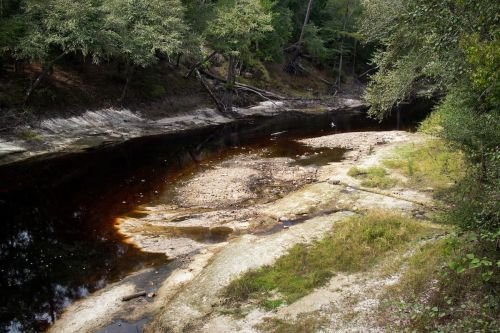
Florida needs to think about efficient irrigation the same way. If we wait until lawns turn crunchy, lakes recede and water restrictions make headlines, we have waited too long. Efficient irrigation should be built into our landscapes and irrigation systems before the next drought arrives. When the drought extends, as it has this year, irrigation is needed to just ensure the survival of landscape plants.
This efficiency is especially important as Florida grows. Every new home represents an opportunity to create a landscape that will use water efficiently for decades. Three complementary Florida programs and resources provide a roadmap.
Start with Florida-Friendly Landscaping™ (FFL) - The basic concept is straightforward: put the right plant in the right place and water efficiently. Plants should be selected for the site's soil, sunlight, drainage, hardiness zone and other conditions rather than expecting irrigation to compensate for poor plant selection. Plants with similar water requirements should be grouped together, turf and planting beds should be designed so they can be irrigated separately, and irrigation should be considered as part of landscape design—not added after the landscape is complete.
Florida Water Star℠ takes those principles further. Florida Water Star is a water-efficiency certification program addressing landscapes, irrigation systems and indoor water use. Its landscape and irrigation criteria emphasize site-appropriate plants, efficient irrigation design and applying water according to actual plant needs. The program also recognizes that many established landscape beds may require little or no permanent irrigation. A landscape designed to need less supplemental water is ultimately more valuable than simply installing increasingly sophisticated equipment to irrigate a water-demanding landscape.
Florida now also has an updated set of Landscape Irrigation and Florida-Friendly Landscaping Design Standards. Developed through a collaborative process involving the FNGLA Landscape Irrigation Committee, water management districts, UF/IFAS, DEP, the Florida Irrigation Society and other organizations, the standards provide practical guidance for new residential and commercial landscapes with permanent irrigation systems.
Importantly, these new FFL standards connect landscape design directly to irrigation design. They address plant grouping, separation of turf and landscape beds, reduced sprinkler areas, microirrigation, irrigation zoning, distribution uniformity, sprinkler spacing, pressure regulation, rain shutoff devices, soil-moisture and weather-based controllers, and post-installation operation. Rather than treating irrigation efficiency as simply a matter of choosing a better controller, they address the entire system from landscape design through installation and operation.
Existing landscapes can benefit from the same principles. Irrigation systems should be inspected periodically, rain shutoff devices kept functional, eliminating unnecessary irrigation to established plant beds, and irrigation schedules adjusted to rainfall and actual plant needs. Automatic irrigation should never mean automatic overwatering.
Florida's challenge is therefore not simply convincing people to conserve water when drought occurs. It is creating landscapes that require less supplemental irrigation and systems capable of applying that water efficiently when it is needed.
Noah built before the flood came. Florida should do the same. FFL provides the principles, Florida Water Star provides a model for water-efficient development, and Florida's updated landscape and irrigation design standards provide the industry with a practical blueprint for putting those principles into practice.

Michael Dukes, Ph.D. is the director of the UF/IFAS Center for Land Use Efficiency (CLUE), which focuses on social, environmental, and economic issues affecting urban landscapes and agriculture in Florida. | Photo courtesy UF/IFAS.
