


Guest Column: The Impacts Hurricanes Have on Urban Forests
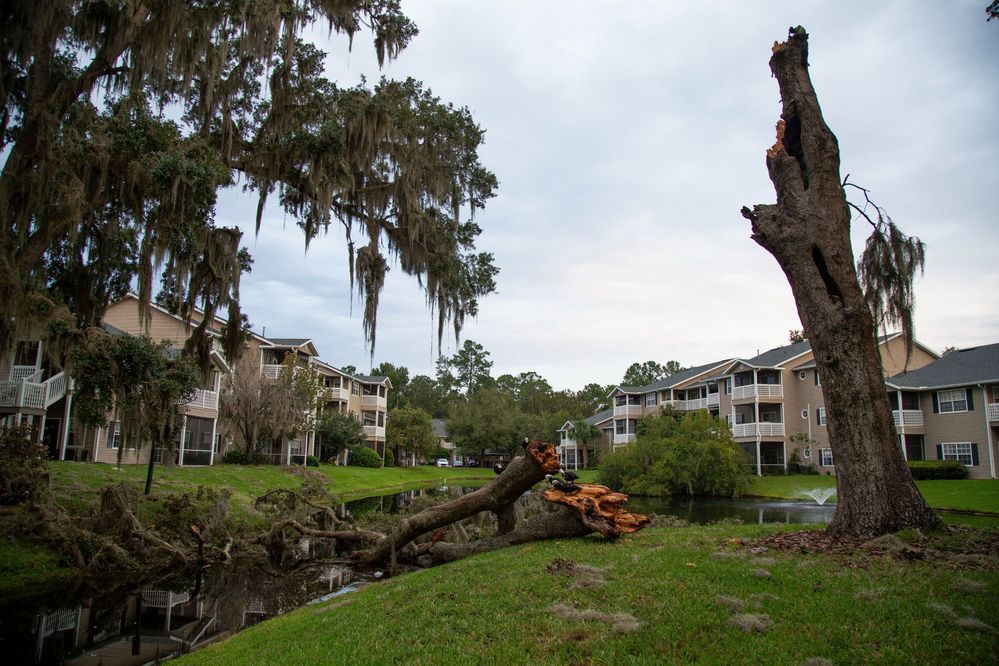
Tree damage from a recent hurricane in Florida. | Image Courtesy UF/IFAS
As many Floridians continue to clear debris from their home lawns and landscapes following Hurricane Helene and Hurricane Milton, it might be easy to consider removing the cause of the debris. Yet the value trees bring to our homes, cities, and communities is not as easy to overlook.
Urban forests provide benefits to the community by lowering utility costs and increasing property value. They reduce soil erosion and stormwater runoff while at same time removing carbon dioxide, producing oxygen, and providing habitat for wildlife. The city of Tampa estimates the value of their urban forest at almost $135 million dollars annually.
UF/IFAS research conducted during Hurricane Irma in 2017 found that 90% of the urban forest in the Naples area survived this category-1 storm with minimal to no damage. Trees like Live Oaks, Black Olives, Mahogany, Ficus, and Cuban laurels had the highest rate of survivability, according to the study. The latest hurricanes will allow researchers to collect additional data about the survivability of more tree species during hurricane conditions across a wider range of wind speeds and rainfall conditions, but it’s still too soon to draw conclusions from that data. Ultimately, researchers hope to use what they learn to help urban foresters make better management decisions about which species to plant.
The lack of diversity in the tree species found in urban forests was a problem even before the hurricanes hit and could become an even bigger issue as cities and counties decide which tree species to replant. Many cities and counties will plant a single tree species that grows well in urban areas .
UF/IFAS experts say this lack of diversity could lead to a disaster if a new disease or pest attacks a heavily planted species or if the species is less resistant to an extreme weather event. A large portion of an urban forest could be wiped out in one event. UF/IFAS experts recommend that cities conduct a tree inventory to help communities better manage this valuable natural resource, but more research is needed after extreme weather events to better protect and conserve our urban forests. With this goal in mind, faculty from the UF/IFAS Environmental Horticulture department are partnering with FNGLA to revive the Southern Tree Conference. This formerly annual conference brought together industry professionals, stakeholders, and researchers from across the state to share the latest information on issues that impact the production and management of landscape trees. Planning for the new version of this conference is currently underway, and organizers are planning to host the 2025 Southern Tree Conference next November. This conference is a critical first step in increasing the knowledge of the role urban trees play in Florida‘s ecosystem.

Michael Dukes, Ph.D., is the director of the UF/IFAS Center for Land Use Efficiency (CLUE), which focuses on social, environmental, and economic issues affecting urban landscapes and agriculture in Florida. Photo courtesy of UF/IFAS.
